
It's a fair question, and one I get in almost every first consultation. In an industry flooded with trends, definitions can get blurry. But biomechanics is a science, not a trend. It's the study of forces and how the human body manages them. Rather than treating it as a concept, we treat it as an objective process. Here is how that process changes what actually happens in the room.
The core difference: assessment before prescription
A conventional training session starts with a program. A biomechanical session starts with a question — why does your body move the way it does?
Before I prescribe a single exercise, I want to know how you organize yourself under load. Which joints are stiff. Which muscles fire late. Where your spine is doing a job that your hips have quietly resigned from. That's not a philosophical distinction; it changes the exercises, the loads, and the order they arrive in.
Anyone can make you tired. Very few can make you tired in the direction your body actually needs.
What a biomechanical assessment actually measures
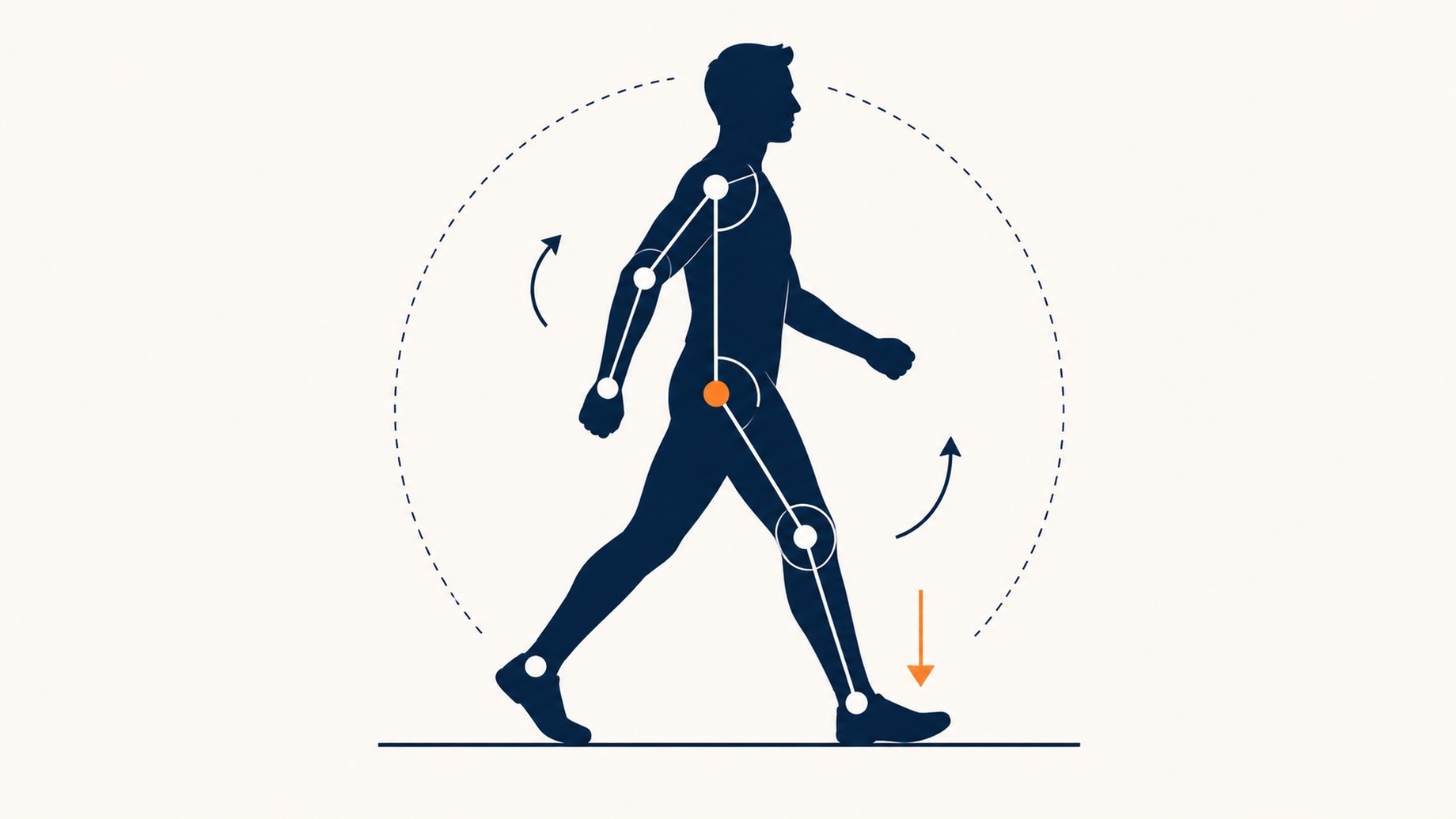
A biomechanical assessment is the objective measurement of your movement variability — your nervous system's capacity to fluidly transition between states of compression (generating force) and expansion (absorbing force). Rather than judging aesthetic posture, it analyzes how your specific skeleton manages gravity, internal pressure systems, and external loads without relying on structural compensations.
Why joint levers change everything
This is the part most people have never had explained to them, and it's the one that tends to land hardest.
Your femur length relative to your torso is not a matter of opinion. If you have long femurs and a short torso, a "textbook" upright squat is mechanically unavailable to you — you will either lean forward or fall backward, and no amount of cueing will change your skeleton. Tell that person their form is wrong, load the bar anyway, and you have manufactured a lower-back problem out of thin air.
The same logic applies to shoulder architecture, hip socket depth and orientation, tibia length. Individual structure determines optimal technique. A specialist adapts the exercise to the body. A template adapts the body to the exercise — and something has to give.
How this differs from physiotherapy
Physiotherapy and active rehab are complements, not competitors, and I'll say plainly that they are not interchangeable.
A physiotherapist manages the injury itself: the acute phase, the tissue, the diagnosis, the clinical care. That's their domain, and when it's needed, it's needed first.
You've been discharged from physio, your resting pain has settled, and you've been told to "return to activity." But no one has shown you how your nervous system is still compensating for that old injury. That gap — where you have "no pain" but zero movement variability — is exactly where re-injury happens.
While physiotherapy rehabilitates the injury, our approach progressively reloads the entire system. We retrain structural variability, restore dynamic pressure management, and rebuild global force capacity so your body stops protecting itself and starts performing again.
A note on scope
Movement and rehab specialists in Alberta don't diagnose medical conditions or provide medical treatment. If your situation requires diagnosis, imaging or clinical care, that's a physician's or a physiotherapist's role — and a good movement specialist will tell you so plainly, then work alongside them.
Who actually needs one?
Not everyone. If you are perfectly satisfied with your current strength progression, moving efficiently, and hitting your performance goals with zero friction, you might not need a specialized approach. However, looking at training through a clinical-biomechanical lens is essential for two distinct types of people: those looking to restore their movement options, and those looking to maximize their raw physical output.
- Breaking unexplained strength plateaus. You're working hard, but your deadlift, squat, or overhead press has stalled. This rarely happens from a lack of effort; it happens because you've hit a structural ceiling. We analyze your joint levers and force profiles to ensure your skeleton is mechanically optimized to transmit force, allowing you to smash through plateaus safely.
- Elite performance optimization and power development. For the pain-free athlete or active professional in Calgary who wants to move faster, lift heavier, or dominate outdoor performance (skiing, backcountry hiking, running). We assess your structural capacity to ensure your nervous system can fluidly transition between compression and expansion, maximizing your rate of force development (RFD) and energy economy.
- The post-physiotherapy and return-to-performance gap. Your clinical rehab is finished and your resting pain is gone, but your baseline confidence and maximal capacity aren't back yet. We bridge this exact gap, moving you systematically from clinical discharge to high-threshold strength and conditioning without triggering old compensations.
- Managing mechanical wear-and-tear (recurring leaks). Nagging discomfort that disappears when you rest but fires up the moment you cross a certain threshold of volume or intensity. This is a clear mechanical signature: your body is overloading a structure that cannot handle it. We reallocate that stress by giving your joints the structural workspace they need to absorb load.
Key Takeaways
- Assessment comes before prescription — always.
- A biomechanical assessment measures your movement variability — how you shift between compression and expansion.
- Your individual structure determines your optimal technique. Structure is not a form error.
- Physiotherapy rehabilitates the injury; our approach reloads the whole system so it performs again.
- The goal isn't "no pain" — it's restoring movement variability, which is where re-injury risk actually drops.
Curious what your assessment would reveal?
Fifteen minutes, no obligation. We'll talk through your history and what to look for.
Book Your Free Evaluation