Biomechanics & Functional Assessment · Calgary, AB
The Science of Movement
"Longevity is not the absence of stress. It is the mastery of how your body manages gravity, internal pressure, and force." Ali Gaadoudi
We replace generic fitness with human physics and structural mechanics. By mapping how your unique skeleton distributes load, we design data-driven progressions that restore movement options and scale raw capacity — whether you are shattering gym plateaus or conquering demanding outdoor terrains, all without forcing dangerous compensations.
Biomechanics: Precision for Every Body
Biomechanics is the advanced science of human movement. We analyze structural strategies and force distribution, assessing pressure dynamics, joint levers, torque, and rotational pathways.
This physics-based approach isn't just for rehab; it is essential for anyone looking to eliminate chronic pain, unlock movement options, and build maximal strength and athletic performance safely.
- Force & pressure management
- Joint levers & mechanics
- Torque & rotational power
- Structural options & pathways
From Root Cause to Final Result
Four steps, always in this order. We never prescribe before we measure — and we never stop measuring once we've prescribed.
-
Step 01
Comprehensive Assessment
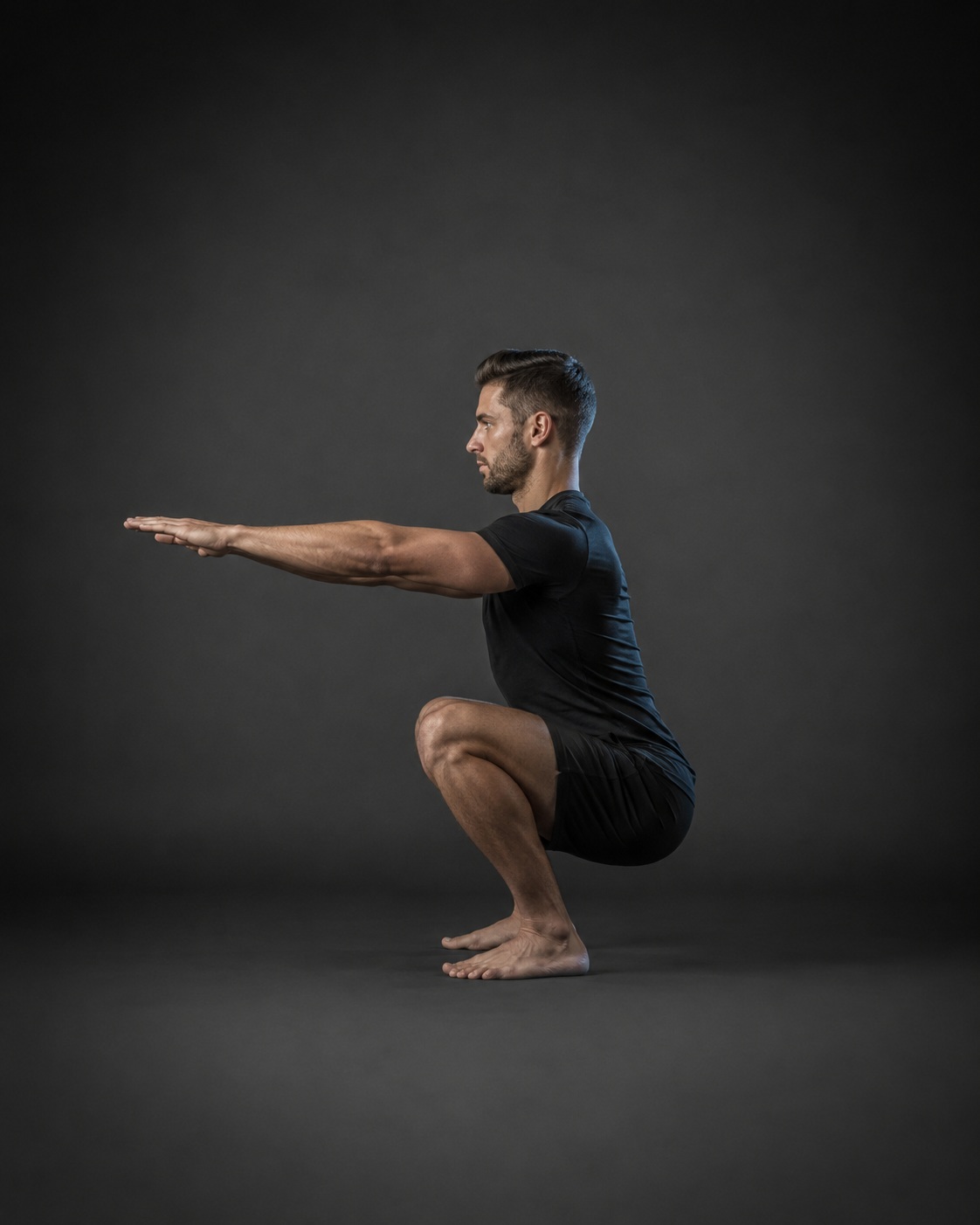
We start with a static and dynamic functional evaluation — such as a Squat Test — to observe and measure your movement limitations.
-
Step 02
Root-Cause Identification
We gather data to understand how your anatomical, physiological, and neuromuscular systems interact, pinpointing the true source of pain or inefficiency.
-
Step 03
Personalized Intervention
We design a targeted program based on your biological age, physical condition, and specific joint angles.
-
Step 04
Guided Progression
We adapt loads and exercises based on your muscular response, constantly monitoring improvements in range of motion, symmetry, and motor control.
Only by truly understanding the person is it possible to structure progressions that are effective, sustainable, and consistent with their real needs.
Ali Gaadoudi