
Let's dispense with the headline first: sitting is not killing you. What sitting does — and it does it very reliably — is hold your body in one shape for so long that certain tissues adapt to that shape and forget the others exist.
Muscle is intelligent tissue. Keep it short for eight hours a day, five days a week, and it will conclude that short is the new normal. Keep another muscle switched off for the same period, and it will lose the neural drive to turn on quickly when you finally need it. That's not damage. It's adaptation. Which is good news, because adaptation runs in both directions.
What sitting actually changes
Four things happen, and they compound:
Hip flexors shorten
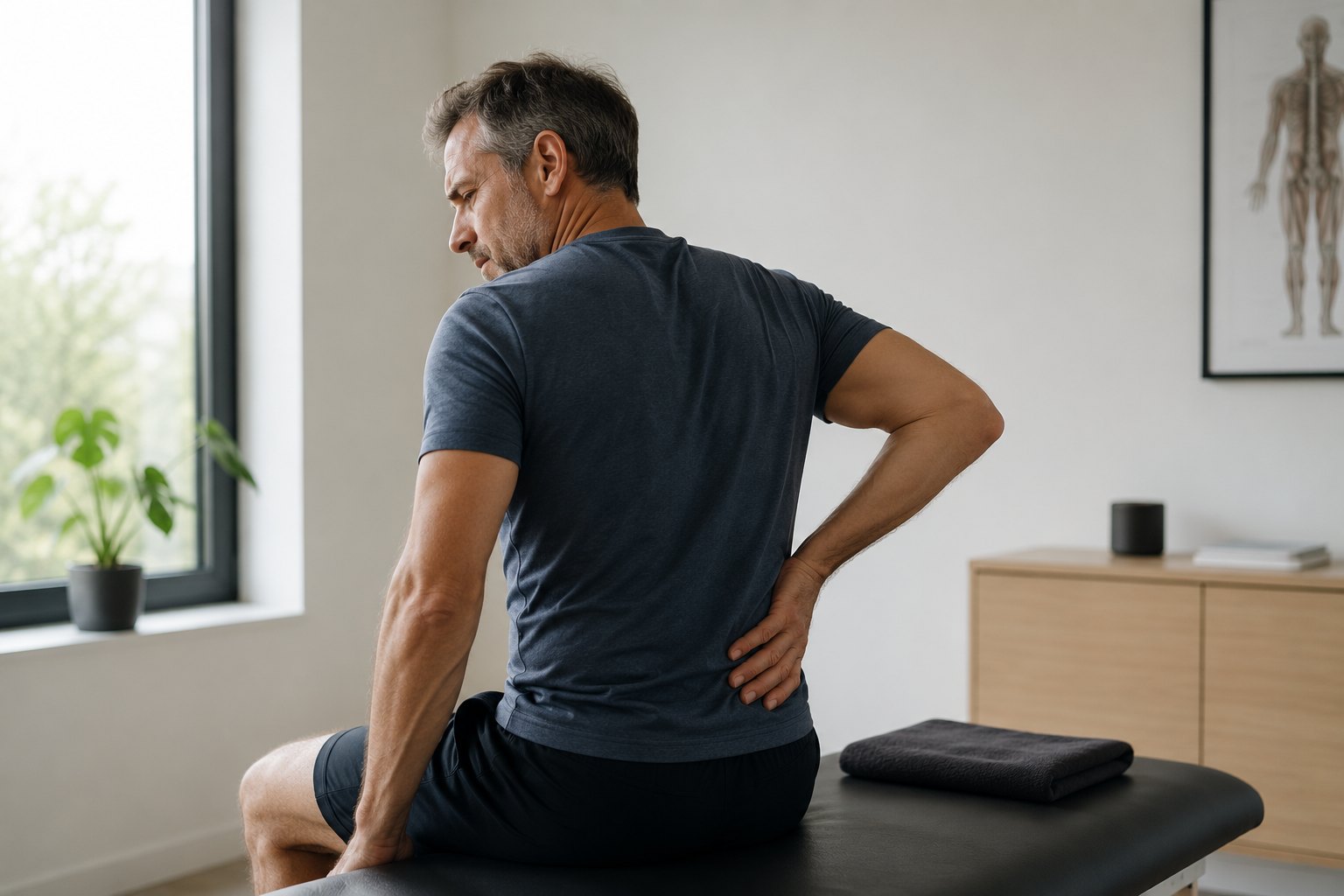
Your hip flexors — psoas in particular — spend the entire day at their shortest available length. When you stand up, they resist letting go. Because the psoas attaches to the lumbar spine, a hip flexor that won't lengthen doesn't just limit your hip: it pulls your lower back into extension every time you walk. That nagging ache after a long day at a desk often isn't a back problem at all.
Glutes go quiet
Sit on a muscle for eight hours and it stops being invited to the party. The glutes are your primary hip extensors and your main defence against your spine doing their job. When they're slow to activate, the lumbar erectors step in — and they are far too small for the workload.
The thoracic spine stiffens into flexion
Your mid-back is built for rotation and extension. Rounded over a laptop, it gets neither. Within months, it stiffens — and every degree of rotation it can no longer produce gets borrowed from the lumbar spine or the shoulder, neither of which wants it.
The head drifts forward
For every inch your head moves in front of your shoulders, the effective load on your neck extensors rises sharply. Your head weighs roughly five kilograms. Held forward for hours, that becomes a sustained isometric contraction you never agreed to.
The best posture is your next posture. Variation beats alignment — every single time.
Set the desk up once, properly
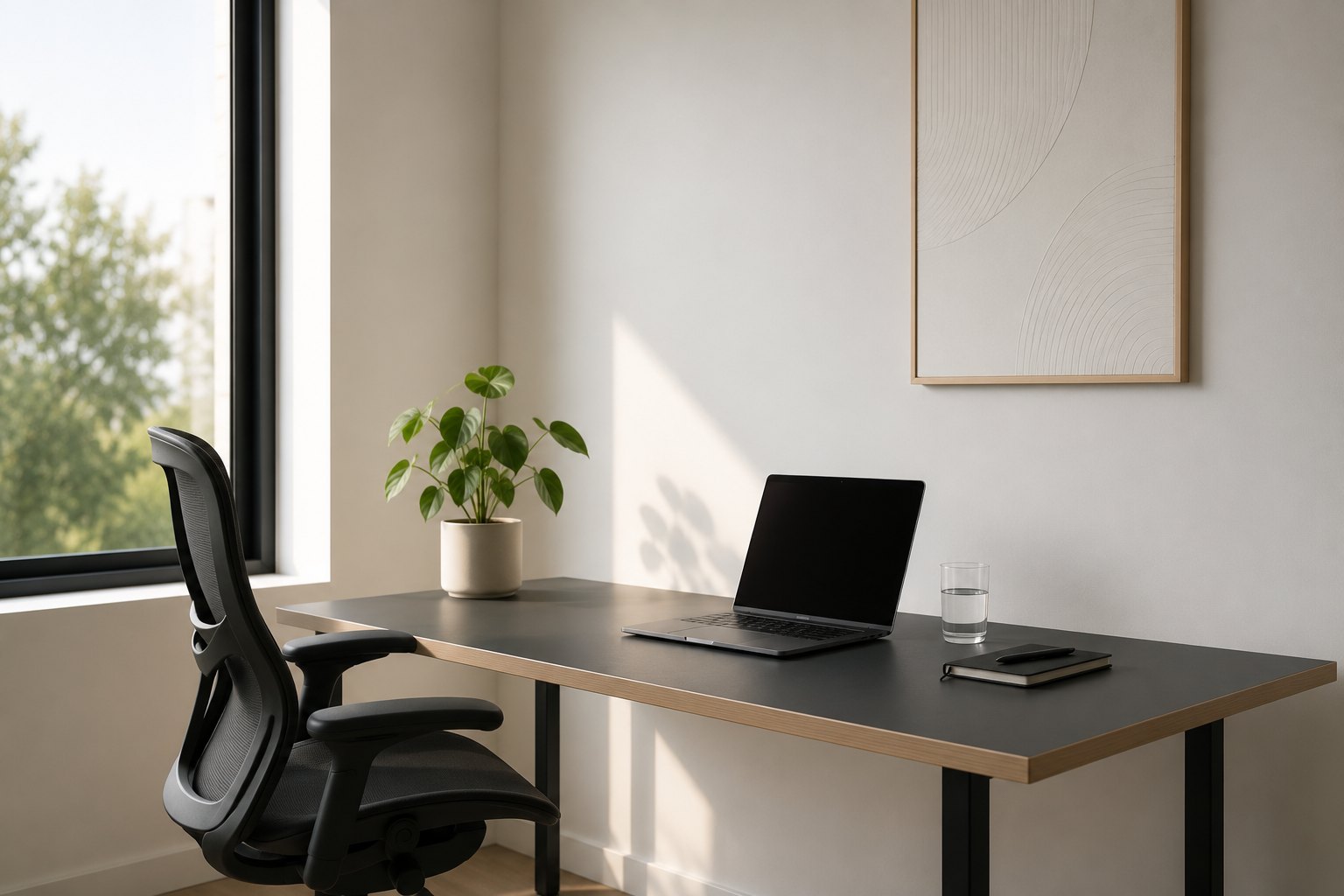
Ergonomics won't save you, but bad ergonomics will actively work against you. Get these right and then stop thinking about them:
- Screen at eye level. The top of the monitor roughly level with your eyebrows. Laptop users: get a stand and an external keyboard. Non-negotiable.
- Elbows at about 90°, forearms supported, shoulders down. If you're shrugging to reach the keyboard, it's too high.
- Hips slightly above knees. This opens the hip angle and reduces the tendency to tuck the pelvis under and slump.
- Feet flat on the floor or a footrest. Dangling feet mean your hamstrings are taking load all day.
Notice what isn't on that list: sitting bolt upright like a soldier. Rigid upright sitting is just a different way of holding still, and holding still is the actual problem.
The daily mobility checklist
This is the part that changes outcomes. It takes about eight minutes total, spread across the day — less time than the coffee break you already take.
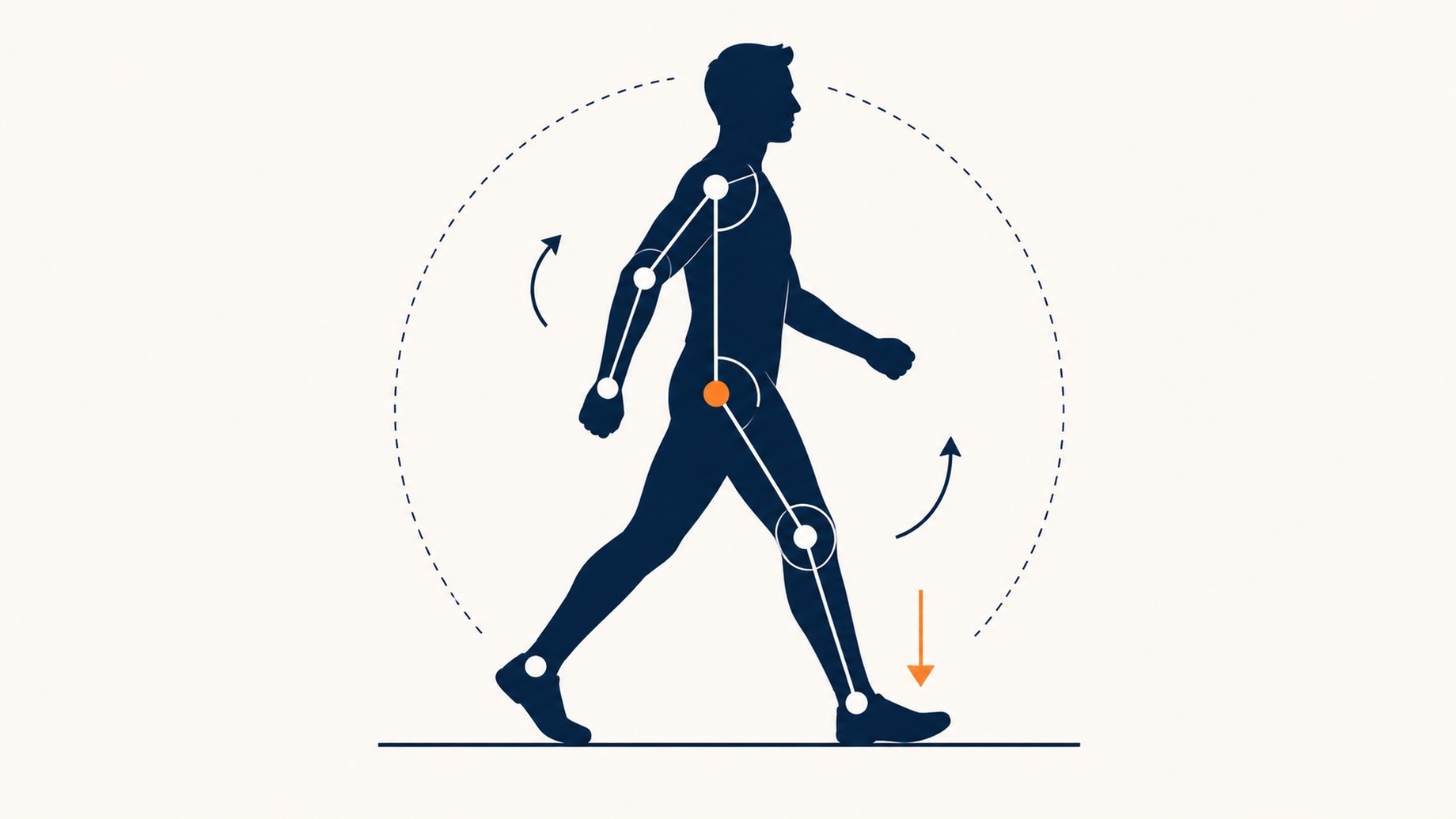
- Every 30–45 minutes: stand up. That's it. Stand, take ten steps, extend your hips fully. This single habit outperforms every ergonomic gadget ever sold.
- Hip flexor stretch — 45 seconds per side. Half-kneeling, tuck the pelvis under, squeeze the glute of the back leg, then lean forward slightly. If you feel it in your lower back instead of the front of your hip, you've lost the pelvic tuck.
- Thoracic rotation — 8 reps per side. Seated, arms crossed over your chest, rotate from the ribs while keeping your hips square. Slow. Exhale as you turn.
- Glute bridges — 12 reps. Lying on your back, drive through the heels and squeeze at the top. This is the reactivation your hips need after a day of being sat on.
- Chin tucks — 10 reps. Draw the head straight back over the shoulders, hold for two seconds. It looks ridiculous. It works.
The rule that matters most
Consistency beats intensity, always. Five minutes a day, every day, will transform your desk-related stiffness. A ninety-minute mobility session every second Sunday will not.
When it's more than stiffness
Most desk-related discomfort resolves with movement variation and the routine above. Some of it doesn't — and that distinction matters.
If you have pain that persists for more than a few weeks, pain that radiates into an arm or a leg, numbness or tingling, or symptoms that wake you at night, that's no longer a mobility issue. That's a signal to be assessed properly — and, depending on what we find, to be referred on.
The same goes for the person who has been doing the stretches diligently for six months with no change. If the pattern isn't shifting, the pattern isn't the problem. Something upstream is driving it, and no amount of stretching the symptom will find it. That's what a movement and posture assessment is for.
Key Takeaways
- Sitting isn't harmful. Sitting still for hours is.
- Sustained sitting shortens hip flexors, quiets the glutes, stiffens the thoracic spine and loads the neck.
- Set up the desk once, then focus on movement variation — not on holding a "perfect" position.
- Stand every 30–45 minutes. It's the highest-return habit available to you.
- Persistent pain, radiating symptoms or numbness need assessment, not more stretching.
Stretching for months with no change?
Then the stretch isn't the answer. Let's find out what is.
Book Your Free Evaluation